South Australia 8 min read
Strata and community title in South Australia: what you are buying into
A unit or townhouse in South Australia comes with a corporation, by-laws or articles, levies and sometimes debts. Older groups are strata title, newer ones community title, and the rules differ. Here is how to tell which you are buying, and what to check before you sign.
Last checked
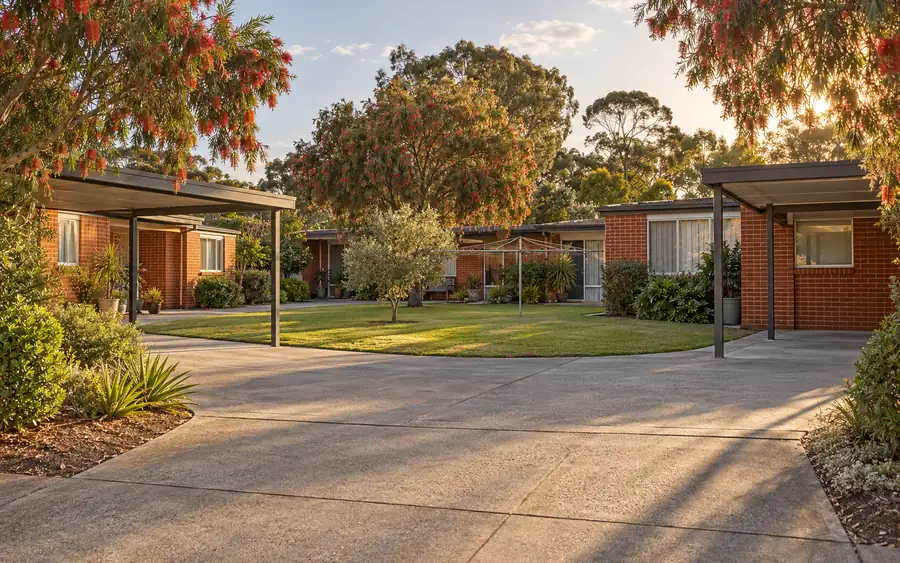
Buy a unit, a townhouse or an apartment in South Australia and you are almost always buying into a group. The lot is yours. The driveway, the gardens, sometimes the roof and the outside walls belong to everyone, and a corporation of all the owners runs them.
The Form 1 vendor's statement carries a notice about this that is worth quoting. It says strata and community titles come with "special obligations and restrictions", and tells buyers to make sure they understand them, and to seek legal advice before signing if unsure. This post is about those obligations: which kind of title you are looking at, what the corporation can make you pay, and what to read before you commit.
Strata title or community title?
South Australia has two systems, and which one applies depends mostly on when the group was created.
Strata title, under the Strata Titles Act 1988 (SA), is the older system. The Law Handbook explains that a strata plan divides land into units plus common property, and that a unit's boundaries follow the building's structural divisions rather than lines on the land. Since 1 June 2009, it has not been possible to create new strata schemes. Strata corporations that existed then still operate under the Strata Titles Act. Many older unit groups in Adelaide's suburbs are strata.
Community title, under the Community Titles Act 1996 (SA), is used for new divisions. The Law Handbook's community titles chapter describes two kinds:
- Community schemes, where lot boundaries are defined by surveyed measurements of the land. The owner of each lot generally maintains and insures the buildings on it, like a house on its own block.
- Community strata schemes, used where one lot sits above another, such as an apartment building. Here the buildings themselves are divided, and the corporation insures them.
A strata corporation can convert to community title by resolution. The Law Handbook notes the conversion cannot be reversed and suggests legal advice before taking that step.
The title search and the Form 1 tell you which you are buying. The answer changes who insures the building and how levies work.
What the Form 1 must give you
Schedule 2 of the Form 1 in the Land and Business (Sale and Conveyancing) Regulations 2025 has a section for a community lot and a separate one for a strata unit. Both require the vendor to apply in writing to the corporation and set out:
- the contributions payable for the lot, including details of any arrears
- the corporation's assets and liabilities
- expenditure the corporation has incurred, or has resolved to incur, that the owner must or is likely to have to contribute to
- the lot or unit entitlement, which sets your share of costs.
And to enclose:
- minutes of general meetings and management committee meetings for the previous 2 years, or since the plan was deposited if that is longer
- the last statement of accounts
- the current insurance policies
- the by-laws (community title) or articles (strata title), plus any scheme description and development contract for a community scheme.
If the corporation has not supplied something by the date of the statement, the vendor must say "not known" and explain what steps were taken to get it. A Form 1 with "not known" against the arrears line deserves a follow-up question before you sign.
Our guide to the Form 1 covers the rest of the statement.
Your right to go to the corporation directly
You do not have to rely on what the vendor provides. Under section 139 of the Community Titles Act, a community corporation must, on application by an owner, prospective owner or mortgagee, and within 5 business days:
- provide a statement of contributions and arrears, assets and liabilities, and expenditure incurred or resolved on
- provide copies of minutes for up to 2 years, the last statement of accounts and current insurance policies
- make available for inspection the accounting records, minute books, any contract with a body corporate manager, and the register of owners.
The corporation can charge a prescribed fee. Section 139(5) adds something useful: a person given a statement under that section can rely on it, as against the corporation, as conclusive evidence of its contents as at its date.
For a strata corporation, the Law Handbook explains that sections 32 and 41 of the Strata Titles Act give a similar right, with the information due within five business days.
Contributions, and debts that follow the lot
How levies are set
Under section 114 of the Community Titles Act, the corporation fixes contributions at a general meeting by ordinary resolution, not by the management committee. Each owner's share is proportional to the lot entitlement unless a unanimous resolution says otherwise.
Arrears pass to the new owner
This is the point the Form 1 notice calls "buying a debt". For community title, section 114(7) makes payment of a contribution enforceable jointly and severally against the owner and the subsequent owner of the lot. For strata title, the Law Handbook says the same thing in plain terms: if you buy a unit with a contribution owing, you as the new owner are liable for it.
So arrears must be identified and cleared out of the vendor's money at settlement. That is one of the things we check.
Sinking funds
Section 116 requires every community corporation to keep an administrative fund and a sinking fund. Non-recurrent spending, meaning spending normally needed less than once a year, comes out of the sinking fund. The Law Handbook notes that strata corporations are not required to have a sinking fund.
An old strata group with no sinking fund and a roof that needs replacing will raise the money from owners when the time comes. Read the minutes for any discussion of major works.
You guarantee the corporation's debts
The Form 1 notice warns that as an owner you are a guarantor of the corporation's liabilities. If it cannot pay its debts, owners can be called on to pay. Check the liabilities in the statement and the minutes before you buy.
Insurance
Community title. Section 103 of the Community Titles Act requires the corporation to insure the buildings and improvements on the common property and, in a strata scheme, the buildings divided by the plan, for full replacement cost with new materials, including demolition and professional fees. Section 109 preserves an owner's right to insure their own lot.
In a community scheme where the lot boundaries are on the ground, your house is generally yours to insure. In a community strata scheme, the corporation insures the building.
Strata title. The Law Handbook explains that a strata corporation must insure the buildings to replacement value and hold public liability cover. Building insurance generally does not cover contents, so occupiers need their own.
Ask for the policy. The Form 1 must enclose it.
By-laws and articles
Community schemes have by-laws; strata corporations have articles. The Form 1 notice lists what they commonly control: pets, car parking, noise, rubbish, short-term letting and the upkeep of buildings. Changes to the outside of your unit, such as an air conditioner, an aerial, a pergola or external blinds, may need the corporation's permission, which can be refused.
The by-laws can also change after you buy, by a vote of the owners. If you are buying off the plan before the community plan is deposited, the by-laws you have been shown are only a draft. Our guide to buying off the plan in South Australia covers that risk.
Mixed-use developments
Some developments combine apartments with shops, offices or a hotel, run by more than one corporation. The Form 1 notice warns that voting rights in those groups may not be equal, and that commercial lot owners may be able to outvote residential owners on some matters. Find out how many corporations there are and what your vote is worth.
How this compares with Victoria
| South Australia | Victoria | |
|---|---|---|
| The body | Strata corporation or community corporation | Owners corporation |
| Information on request | Within 5 business days | Owners corporation certificate within 10 business days |
| Unpaid levies | Recoverable from the new owner | Recoverable from the owner for the time being |
| Sinking fund | Required for community corporations; not for strata | Maintenance fund required with a maintenance plan, compulsory for larger owners corporations |
Our guide to owners corporation certificates in Victoria covers the Victorian side.
Questions we get asked
The unit was built in 1975. Is it strata or community title?
Most likely strata, unless the corporation has since converted. The title search and Form 1 will say which.
Can I see the corporation's records before I sign?
Yes. As a prospective owner you can apply directly. A community corporation must respond within 5 business days, and the Law Handbook gives the same five business days for a strata corporation.
Who fixes the roof?
It depends on the scheme. In a strata scheme or community strata scheme, the corporation generally maintains and insures the building. In a community scheme, the lot owner generally does. Check the plan, the by-laws or articles, and the insurance policy.
Talk to us before you sign
We are registered in South Australia with Consumer and Business Services and act for buyers on South Australian purchases from our office in Cranbourne, Victoria. South Australian conveyancing runs electronically, so we can act wherever the property is. We do not have an Adelaide office. We are open Monday to Friday, and on weekends by appointment.
Send us the Form 1 and contract. Ask us for a quote, or get in touch if you would rather talk it through first. If you are already an owner and in a dispute with the corporation, that is a matter for a solicitor.
This article is general information about South Australian conveyancing and is not legal advice for your particular transaction. Speak to us about your specific circumstances.
Read next
South Australia
What is a Form 1 in South Australia?
The Form 1 is the disclosure statement a South Australian seller has to serve on the buyer. Here is what goes in it, who signs the certificate, when it is due, and why service of the Form 1 is what starts the cooling-off clock.
South Australia
Buying off the plan in South Australia: where the law protects you, and where only the contract does
South Australia has no Victorian-style off-the-plan law. There is no statutory deposit cap, no default registration deadline and, for now, no limit on a developer using a sunset clause. Reform is out for consultation until 30 October 2026. Until it passes, the contract is your protection.