Conveyancing in Clyde North, where plenty of contracts are signed before the title exists
Clyde North has around 55 active estates. A lot of what gets signed here is land that is still a line on a plan, with a sunset date, a registration timetable and a separate builder to keep in step. We read the contract before you sign it, and the fee is agreed before we start.
The local picture
One suburb, 55 estates, all at different stages
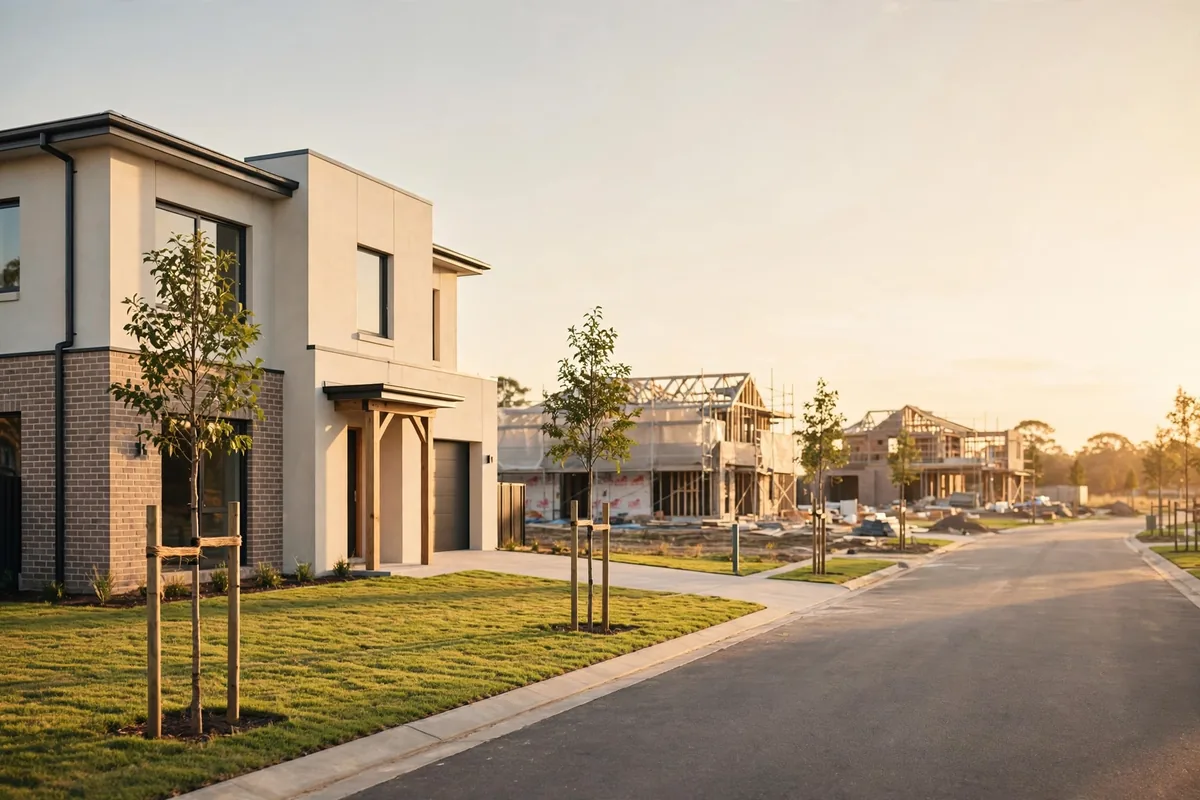
Clyde North has been one of the fastest building suburbs in the country, with dwelling approval rates among the highest anywhere in Australia. Estates in and around it include Berwick Waters, Smiths Lane, Meridian, Orana, Five Farms, Highgrove, Oak Grove and Somerford, and each one releases land in stages. Stage 4 might be titled and built out while stage 11 is still a survey peg in a paddock.
That stage number matters more than the street name. It decides whether you are buying land that exists in the register today or land that will exist when the plan of subdivision is registered. Everything else in your contract hangs off that one fact, including when you pay the balance, when you can start building, and what happens if the developer runs late.
We are ten minutes down the road at Office 4, Level 1, 105A High Street, Cranbourne. Most of this is handled electronically, so you do not have to come in. Plenty of people do anyway, usually with a contract in their hand on a Saturday.
Three words that change the contract
- Registered
- The plan of subdivision is registered and the lot has its own title. This behaves much like buying an established property, with a settlement date you can actually diarise.
- Unregistered
- The lot is on a proposed plan only. You pay a deposit now and the balance later, usually within a set number of days after the developer gives notice that the plan has registered. That notice can arrive earlier or much later than the sales office suggested.
- Titled and vacant
- Someone bought it off the plan, the title issued, and now they are reselling. You are buying from an owner, not a developer, and any build obligation attached to the land comes with it.
Off the plan
What is actually different about buying in a new estate
These are the clauses that catch people out here. None of them are unusual in Clyde North. All of them are worth understanding before you sign rather than after.
The sunset date
Almost every unregistered land contract has a date by which the plan must be registered. If it is not registered by then, the contract can be ended and your deposit comes back. That sounds like protection, and sometimes it is, but land values move over two or three years and ending the contract can suit one side far more than the other. Victorian law now limits when a vendor can use that clause and requires notice. We check the date, who can rely on it, and what happens to your deposit in the meantime.
Registration timing you do not control
Your settlement is usually triggered by the developer giving notice that the plan has registered, not by a fixed calendar date. That makes finance approval awkward, because approvals expire. It also means your build cannot start until the land is yours. We track the notice, tell your broker the moment it lands, and work to the deadline in your contract rather than the one in the brochure.
Two contracts, not one
House and land in these estates is almost always split. One contract is with the developer for the land, and a separate one is with the builder for the house. They have different dates, different deposits and different rules. We act on the land contract. The building contract is a domestic building matter, and if you want it reviewed, that belongs with a solicitor who does building work. We will say so plainly rather than pretend it is the same job.
Section 173 agreements and design rules
Land in the growth corridor often carries a section 173 agreement recorded on the title, plus a developer design guideline. Between them they can set a period within which you must build, restrict fencing, materials, driveways or a second dwelling, and require approval of your plans before council even sees them. These bind whoever owns the land next, so they matter on resale as much as on purchase.
Nomination before settlement
Nomination is where the person who signed the contract substitutes someone else to settle, a parent adding a child, or a buyer restructuring before the land titles. It is common here because so much time passes between signing and settlement. It is also one of the easier ways to trip a duty problem, so anything with a duty consequence goes to the State Revenue Office or your accountant, not to us.
Owners corporations and shared assets
Some releases include a lake, a wetland reserve, private roads or shared walls on smaller lots, and those can bring an owners corporation with fees and rules. Not every estate has one and the paperwork does not always say so on the front page. We look for it in the vendor statement and tell you what the ongoing cost is.
How it runs
A Clyde North land purchase, start to finish
The gap between step two and step three is the part nobody warns you about. It can be months.
-
1
Before you sign
Send us the contract and the vendor statement from the sales office. We read the sunset date, the registration terms, the section 173 agreement and the design guideline, then call you and tell you what you are agreeing to.
-
2
Signing and deposit
You sign, the deposit is paid, and the contract is on foot. Your identity is verified for the electronic settlement system. After that the land goes quiet while the developer builds roads and services.
-
3
Registration notice
The developer serves notice that the plan is registered. Your settlement clock starts from that notice, and it is usually short. This is when finance has to be current, not approved once two years ago.
-
4
Settlement, then build
Settlement happens electronically and the title issues in your name. Only then can your builder start on site. We confirm the moment it is done and send everything your builder and your lender will ask for.
Before the sales office closes
Ask these while you are still standing in the display village
Sales staff answer them readily. The answers tell us most of what we need to know before we even open the file.
- Which stage is this lot in, and is that stage registered yet?
- What is the sunset date in this contract, and can the vendor end it?
- How many days after the registration notice do I have to settle?
- Is there a section 173 agreement, and does it make me build within a set time?
- Is there an owners corporation, and what are the annual fees?
- Is the land contract conditional on the building contract, or are they independent?
- What are the design guidelines on fencing, facade and a second dwelling?
- Has the lot dimension or the plan changed since the price list was printed?
Not sure what the answers mean? Send them through with the contract and we will tell you. Contract review is where most Clyde North matters start.
Also common here
It is not all first releases
Selling a house you built here
The early estates are turning over now. Your section 32 has to disclose the section 173 agreement, the owners corporation if there is one, and any building work done since. We prepare it and order the certificates early.
Read more →Adding or removing a name
Partners, family members and estates. Transfers on a lot that still carries a build obligation need the title read first, because the obligation moves with the land.
Read more →Buying at a Saturday auction
Established Clyde North homes now go to auction like anywhere else. There is no cooling off when the hammer falls, so the contract has to be checked during the week before.
Read more →Where we will send you somewhere else
A dispute with your builder, a defect claim, anything heading to VCAT or a court, probate, a trust or a family law property order all belong with a solicitor. Questions about duty, the first home buyer concessions or foreign purchaser surcharges belong with the State Revenue Office or your accountant. We would rather tell you that on the first call than three weeks in.
Worth reading
Guides for Victorian buyers
Get in touch
Send us the contract before you sign it
Five questions, and you will hear back from a person who has read them. Attach the contract and the vendor statement when we reply, or call 0450 016 397 if the sales office wants an answer today.
Office 4, Level 1, 105A High Street, Cranbourne VIC 3977
Monday to Friday, 9am to 5pm
Weekends by appointment