
Subdividing a block, from certified plan to new titles
Splitting one title into several is a sequence, and each step waits on the one before it. We handle the title and conveyancing side of that sequence, and we tell you plainly which parts belong to your surveyor, your planner or the council.
The sequence
Five stages, in this order, every time
Nothing here can be skipped or reordered. Knowing where you are in the sequence is most of what stops a subdivision feeling like a black hole.
-
1
Planning permit
You apply to your council to subdivide. Council assesses the proposal against the planning scheme, may advertise it, and then issues a permit with conditions attached. This stage is planning work, not conveyancing, and it is usually the longest part.
-
2
Plan of subdivision
A licensed surveyor surveys the land and draws the plan, showing the new lots, any common property, easements and restrictions. The plan goes to council through SPEAR for certification, which confirms it matches the permit.
-
3
Statement of compliance
Once you have met the permit conditions, including any servicing and works requirements, council issues the statement of compliance. The plan cannot be registered without it. Subdivisions stall here more often than anywhere else.
-
4
Lodgement and registration
The certified plan, the statement of compliance and the supporting dealings are lodged with Land Use Victoria. If the land is mortgaged, your lender must consent. Registration is the moment the old title stops existing.
-
5
New titles issue
Each new lot gets its own volume and folio. Only now can a lot be settled, mortgaged separately or transferred. Sale contracts signed earlier finally have something to settle on.
-
Not sure which stage you are at?
Send us the permit and the plan. We will read them and tell you what is actually outstanding.
Get my quote
Who does what
Three different people, and they are not interchangeable
This is the single biggest source of confusion we see. Paying the wrong professional to do the wrong part wastes months.
The town planner
Prepares and argues the planning permit application. Deals with the council planning department, responds to objections, and advises on what the planning scheme will allow. If the permit is refused and you want to challenge it, that is a planner or a planning lawyer, not us.
The licensed surveyor
Does the field survey and draws the plan of subdivision. Sets the boundaries, shows easements and common property, and lodges the plan for certification through SPEAR. The surveyor also handles re-establishment surveys where the old boundaries are unclear.
Us, the conveyancer
Everything on the title. We check what is already registered against the land, deal with your lender for consent and for production of title, lodge the dealings for registration, prepare the sale paperwork for the new lots, and settle them once the titles issue.
We talk to your surveyor directly. You should not have to relay questions about easements between two offices, and title problems are much cheaper to fix before a plan is certified than after.
On the title
Owners corporations and Section 173 agreements
An owners corporation is created when the plan registers, not before, and only where the plan creates common property or shared services. A common driveway, a shared wall or a shared drainage system will usually do it. A battleaxe lot with its own driveway on title often will not.
If one is created, it comes with obligations from day one. There are records to keep, an insurance requirement, and disclosure that has to go into every contract when a lot is sold. We set that up properly at registration so your first sale is not held up by paperwork that should have existed already.
A Section 173 agreement is different. It is an agreement between you and the council under the Planning and Environment Act 1987, recorded on your title, and it binds whoever owns the land next. Councils in growth areas use them often, to restrict further subdivision, to require a dwelling of a certain kind, or to tie land to a particular use. Read it before you sign the permit conditions, because it does not lapse when you sell.
What we check before anything is lodged
- Existing mortgages, and whether your lender will consent in time
- Caveats and any other dealing sitting on the title
- Easements and covenants that could limit where you can build
- Any Section 173 agreement already recorded on the land
- Whether the plan creates common property, and what follows if it does
- How each new lot will be released and settled once titles issue
Selling early
Selling off the plan before registration
Most subdividers want to sell before the titles issue, to fund the works or to lock in a buyer. That is allowed. It also changes the contract completely.
Settlement waits for registration
A lot that has no title cannot settle. The contract is written around that, with settlement triggered by registration rather than by a fixed date. Your buyer needs to understand this before they sign, and so does their lender.
The plan must be disclosed
The Sale of Land Act 1962 requires the proposed plan to go to the purchaser with the contract. If the plan is later amended in a way that materially affects the lot they are buying, the purchaser has to be told and may be entitled to walk away.
Sunset clauses are regulated now
A residential off-the-plan contract has a sunset date, and Victorian law no longer lets a vendor simply rescind when it passes. You generally need the purchaser's written consent, or an order of the Supreme Court. Plan your dates realistically.
If a sunset dispute has already started, or you need a Supreme Court application, that is a solicitor's work and we will say so. We prepare and run the contracts. We do not appear in courts or tribunals.
Casey and Cardinia
Growth area subdivision, from an office on High Street
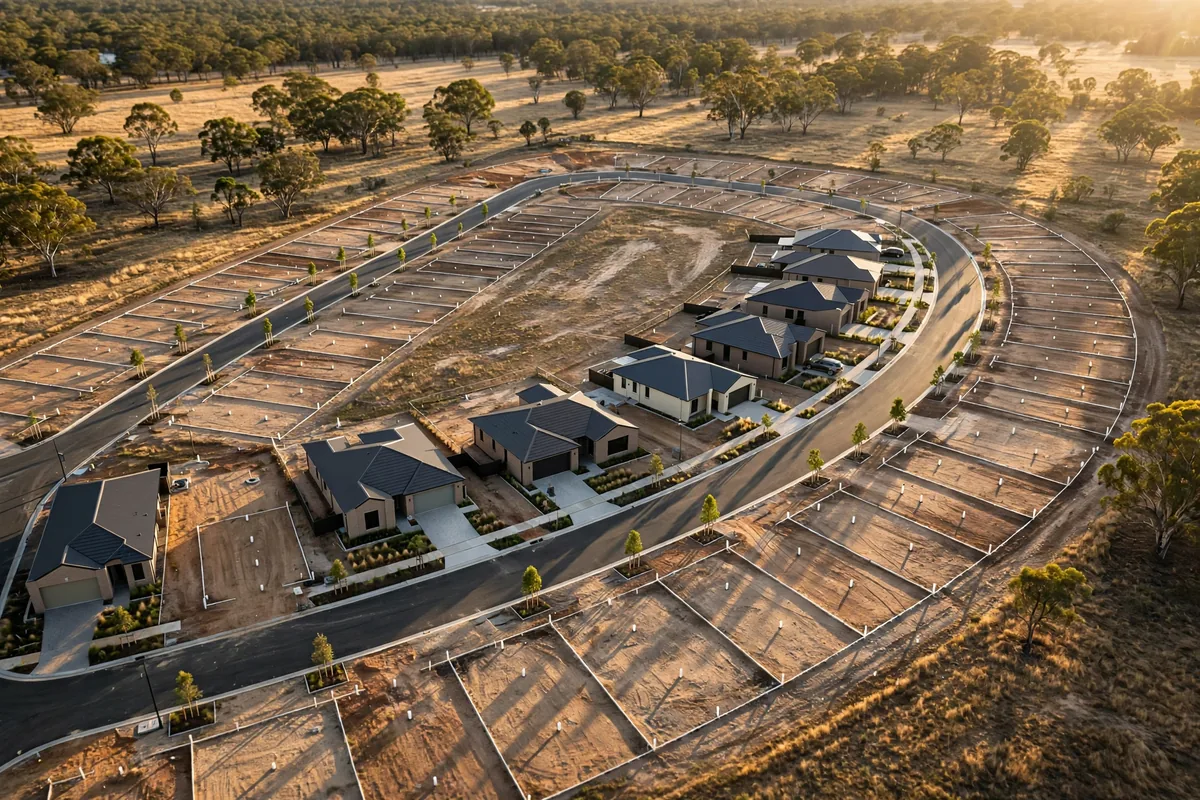
Our office is in Cranbourne, in the middle of it. Clyde North alone has around 55 active estates and sits among the highest dwelling approval rates in the country. Cranbourne East, Cranbourne West, Clyde, Botanic Ridge, Junction Village, Devon Meadows, Lynbrook and Lyndhurst are all being cut up and built out at the same time.
Casey and Cardinia are two separate councils with their own requirements and their own pace. A permit condition worded one way in Casey reads differently in Cardinia, and the servicing authorities have their own queues on top of that. We work in both, along with Berwick, Narre Warren, Hampton Park, Officer and Pakenham.
Most of what we see is modest. One family block becoming two. An older house on a large lot where the back half can go. A builder taking a corner site into four townhouses. The rules are the same at any size, and small subdivisions are the ones most often done without proper title advice.
Read first
Subdividing land in Victoria: the full guide
A longer walk through the same process, including what each stage actually costs you in time, what SPEAR is doing behind the scenes, and the title traps that show up in older Cranbourne blocks.
Read the guide →What we will send you elsewhere for
We do not do planning appeals, tribunal or court work, development disputes, or advice on duty and tax. We also do not advise on how to structure a development for ownership or finance. Those are questions for a planner, a solicitor or your accountant, and we would rather point you to the right one than take work we should not.
Questions
What people ask us about subdividing
How long does a subdivision take in Victoria?
It depends on the council, the number of lots and how many permit conditions involve servicing works. The planning permit stage is usually the longest and is out of your hands. Once the plan is certified, the wait is for the statement of compliance, and then registration at Land Use Victoria. We cannot promise a date, and anyone who does is guessing.
Do I need a surveyor as well as a conveyancer?
Yes. A licensed surveyor prepares the plan of subdivision and lodges it for certification. We do not do survey work and a surveyor does not do title work. The two jobs run alongside each other, and we talk to your surveyor directly so you are not passing messages between us.
Can I sell a lot before the plan is registered?
You can sell off the plan, but settlement cannot happen until the plan is registered and the new title has issued. The contract has to disclose the plan, and the purchaser has rights if the plan is later amended in a way that materially affects their lot. Get the contract and vendor statement right before the campaign starts.
What is a statement of compliance?
It is the council document confirming you have satisfied the conditions of the planning permit and the subdivision requirements. Without it, the plan cannot be lodged for registration. It is often where a subdivision stalls, because servicing and works conditions take time to sign off.
Does my bank need to be involved?
If the land is mortgaged, your lender has to consent before the plan is certified and before it is registered. Lenders are slow at this, so we start it early rather than discovering the problem at the end. If lots are being sold, the lender also needs to agree to release each one at settlement.
Will my subdivision create an owners corporation?
Only if the plan creates common property or shared services. A plain two lot subdivision with its own driveway on title often does not. The plan itself tells us, and we read it before you commit to anything.
What is a Section 173 agreement?
It is an agreement between you and the council, recorded on the title, that binds you and every owner after you. It might restrict further subdivision or control how the land is used. If one is on your title, it has to be disclosed when you sell.
Do you handle subdivisions outside Cranbourne?
Yes. We act across Victoria, and the electronic system means location is not the limit. Most of our subdivision work sits in the City of Casey and Cardinia Shire, so we know how those two councils run.
Get in touch
Tell us about the block
Address, how many lots you are after, and whether a permit has been issued yet. That is usually enough for us to tell you what is involved. If you would rather talk it through, call 0450 016 397 or email convey@wisestep.com.au.
Office 4, Level 1, 105A High Street
Cranbourne VIC 3977
Monday to Friday, 9am to 5pm
Weekends by appointment