
Victoria 8 min read
House and land packages in Victoria: two contracts, two sets of rules
A house and land package is sold as one product, but legally it is usually two contracts under two different Acts, with different deposits, different cooling-off rights and different risks. Knowing which rule belongs to which contract is most of the battle.
Last checked
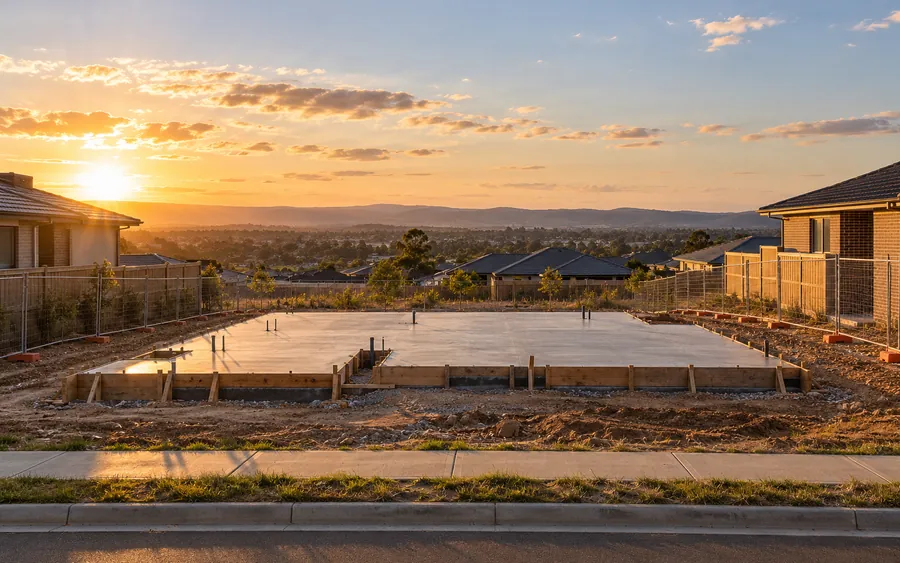
Drive through Clyde North, Cranbourne West or Officer on a weekend and you will pass display villages selling house and land packages. The brochure shows one price. The paperwork, in most cases, is two contracts.
The first is a contract of sale for the land, governed by the Sale of Land Act 1962. The second is a major domestic building contract with the builder, governed by the Domestic Building Contracts Act 1995. They are signed with different parties, they settle or finish at different times, and they give you different rights.
This post walks through both, then through the money: deposits, duty and the first home buyer benefits.
The land contract
The land is usually a lot on a new estate. Whether it has a title yet makes a big difference.
If the lot is not titled yet
If the plan of subdivision has not been registered, the land contract is an off-the-plan contract, and the Sale of Land Act's off-the-plan protections apply:
- the deposit cannot exceed 10 per cent and must be held on trust until the plan registers (section 9AA)
- if the plan is not registered within 18 months, or the period the contract sets, you can rescind (section 9AE)
- you can rescind within 14 days if a plan amendment materially affects your lot (section 9AC)
- the developer cannot rescind under a sunset clause without your written consent or a Supreme Court order (sections 10A to 10F).
Our guide to off-the-plan contracts covers each of these in detail.
If the lot is titled
A titled lot is an ordinary land purchase. The deposit is whatever you agree, held by the vendor's agent or conveyancer until settlement. Settlement is usually within a set number of days, and the builder cannot start until it happens.
What to look for in the land contract
- Design guidelines and covenants. Most estates restrict what you can build: facade style, fencing, setbacks, roof colour, sometimes the number of dwellings. They usually sit in a restrictive covenant or a memorandum of common provisions on the title, and the developer often has to approve your house plans before the builder can apply for a building permit. Our guide to easements and covenants explains how to read them.
- Growth areas infrastructure contribution. Much of the south-east growth corridor is in a GAIC contribution area. Section 32G of the Sale of Land Act requires the Section 32 to say whether GAIC applies and attach the relevant certificates. On most new estates the developer has dealt with it, but the State Revenue Office's GAIC page explains how it works, and we check the certificates.
- Easements on the lot. A drainage or sewerage easement along the back boundary limits where the house can sit.
- Settlement timing. If the lot is not titled, settlement is usually a set number of days after you are notified that the plan has registered. That date can be months away, and your finance approval needs to last.
The building contract
A major domestic building contract has its own rulebook. These rules come from version 94 of the Domestic Building Contracts Act, in force from 1 July 2026.
Deposit: capped at 5 per cent
Section 11 says a builder must not demand or receive a deposit of more than 5 per cent of a contract price of $20,000 or more (10 per cent below that) before starting work. If the builder breaks this rule, you may avoid the contract at any time before it is completed, unless VCAT thinks that would be unfair.
Cooling off: 5 clear business days
Section 34 lets you withdraw from a major domestic building contract within 5 clear business days after you receive a copy of the signed contract. You give the builder a signed written notice. The builder can keep $100 plus any out-of-pocket expenses you approved, and must refund the rest.
There are two exceptions. You cannot cool off if you previously signed a contract in substantially the same terms with the same builder for the same land, or if you got independent advice from an Australian legal practitioner about the contract before signing.
If the contract does not contain the required cooling-off notice, section 35 lets you withdraw within 7 days of becoming aware it should have.
Note how this differs from the land. A private sale land contract has a 3 clear business day cooling-off period under the Sale of Land Act. Our post on the Victorian cooling-off period covers that one. Two contracts, two windows, two different notice requirements.
Progress payments: the Act sets the maximums
Section 40 caps what a builder can demand at each stage. For a contract to build all stages of a home:
| Stage | Maximum, as a share of the contract price |
|---|---|
| Base stage | 10% |
| Frame stage | 15% |
| Lock-up stage | 35% |
| Fixing stage | 25% |
Add the 5 per cent deposit and the builder has been paid at most 90 per cent by the end of fixing, leaving the balance for completion. The parties can only agree to a different schedule in the way the regulations allow. The Act also defines each stage. For example, frame stage means the frame is complete and approved by a building surveyor, which is worth checking before you authorise a payment.
Home Warranty, from 1 July 2026
For building contracts signed on or after 1 July 2026, the Building and Plumbing Commission's Home Warranty scheme replaced domestic building insurance for eligible work worth more than $20,000.
- The builder must pay the premium before the earlier of 10 business days after the contract is signed and the start of work.
- Cover can provide up to $400,000 in total assistance per home, subject to eligibility, limits and exclusions.
- It covers major defects for up to 6 years after completion, and other defects or non-compliant work for up to 2 years.
- It may help with lost deposits where work has not started, and with accommodation and storage costs.
The BPC's advice before signing is to check the builder is registered, confirm the work is eligible, and ask when the premium will be paid and when you will receive your Notice of Cover. Keep the Notice of Cover with your contract. Using an unregistered builder for work that needs a registered one leaves you outside the scheme.
Who reviews the building contract
We act on the land contract and the settlement. A building contract is not a sale of land, so advice on its terms, its variations clauses or a dispute with the builder belongs with a solicitor. We will tell you what we see in it that affects the land side, such as conditions tied to land settlement or title, and point you to the right adviser for the rest.
Stamp duty: usually on the land only
When you buy vacant land under one contract and sign a separate building contract with a builder, duty is generally charged on the land. The SRO's first home buyer pages say that for vacant land, the value assessed is the land alone, without the value of your building contract.
That is the main reason house and land packages are popular with first home buyers. A $380,000 lot is well inside the $600,000 first home buyer exemption, even if the finished home is worth much more.
Two cautions:
- Linked contracts. Where the land contract and building contract depend on each other, or the vendor is also building the house, duty can be assessed differently. Send us both contracts before you sign.
- The temporary off-the-plan concession does not help here. It applies to lots in a strata subdivision with common property, and does not apply to house-and-land packages that are not part of a strata subdivision.
The residence requirement for vacant land
If you claim the first home buyer exemption or concession on vacant land, the clock is different from an established home. You must move in by the earlier of 12 months from when the occupancy permit is issued, or 36 months from settlement of the land, and live there for 12 continuous months. A build that runs late can put that at risk.
The First Home Owner Grant
The $10,000 grant covers a new home you build, valued up to $750,000. Under a house and land package that value is the home as a whole, so add the land price and the building contract together before you assume you qualify. The SRO's grant page sets out the eligibility rules. Your lender usually lodges the application so the money can go towards a progress payment. Our guide to first home buyer duty and the grant has the thresholds and examples.
The order things happen in
- Sign the land contract. Cooling-off: 3 clear business days for a private sale.
- Sign the building contract. Cooling-off: 5 clear business days after you receive the signed copy.
- Finance. The lender usually needs both contracts and approves a land loan and a construction loan.
- Title registers (if the lot was off the plan). You receive notice and a settlement date.
- Land settles. We handle this through PEXA, and duty is paid on the land.
- Developer approves the plans, and the builder gets the building permit.
- Construction, paid by stage.
- Occupancy permit, final payment, keys.
The two cooling-off periods run separately. Signing both on the same afternoon at a display home does not merge them.
Questions we get asked
Is a house and land package always two contracts?
Usually, but not always. Some developers sell a single contract for a completed or partly built house. That is a different structure, with different duty treatment, and the off-the-plan concession may apply to it. Read the paperwork rather than the brochure.
The builder wants a 10 per cent deposit. Is that allowed?
Not on a contract price of $20,000 or more. Section 11 caps the deposit at 5 per cent before work starts.
Can I get out of the land contract if the building contract falls through?
Only if the land contract says so, or another right applies. They are separate contracts. If you need one to depend on the other, that has to be written into the contract before you sign.
Talk to us before you sign at the display village
The sales consultant's job is to get both contracts signed. Ours is to make sure you know which promises are in which document.
Wise Step Conveyancing is at 105A High Street, Cranbourne, a short drive from the estates in Clyde, Clyde North, Botanic Ridge and Cranbourne West. We act on the land contract and settlement as part of a property purchase. We are open Monday to Friday, and on weekends by appointment. Ask us for a quote, or get in touch if you would rather talk it through first.
This article is general information about Victorian conveyancing and is not legal advice for your particular transaction. Speak to us about your specific circumstances.
Read next
Victoria
Buying off the plan in Victoria: the contract, the deposit and the sunset date
An off-the-plan contract can run for a year or more before you own anything. The Sale of Land Act gives you a set of rights for that gap: a capped deposit held on trust, a way out if the plan changes or never registers, and protection from a developer who wants to cancel and resell.
Victoria
First home buyer stamp duty in Victoria: the thresholds, the grant, and the conditions people miss
If the dutiable value is $600,000 or less, a Victorian first home buyer pays no stamp duty. Here is where that line sits, what the $10,000 grant covers, and the conditions attached to both.