
Victoria 10 min read
Buying off the plan in Victoria: the contract, the deposit and the sunset date
An off-the-plan contract can run for a year or more before you own anything. The Sale of Land Act gives you a set of rights for that gap: a capped deposit held on trust, a way out if the plan changes or never registers, and protection from a developer who wants to cancel and resell.
Last checked
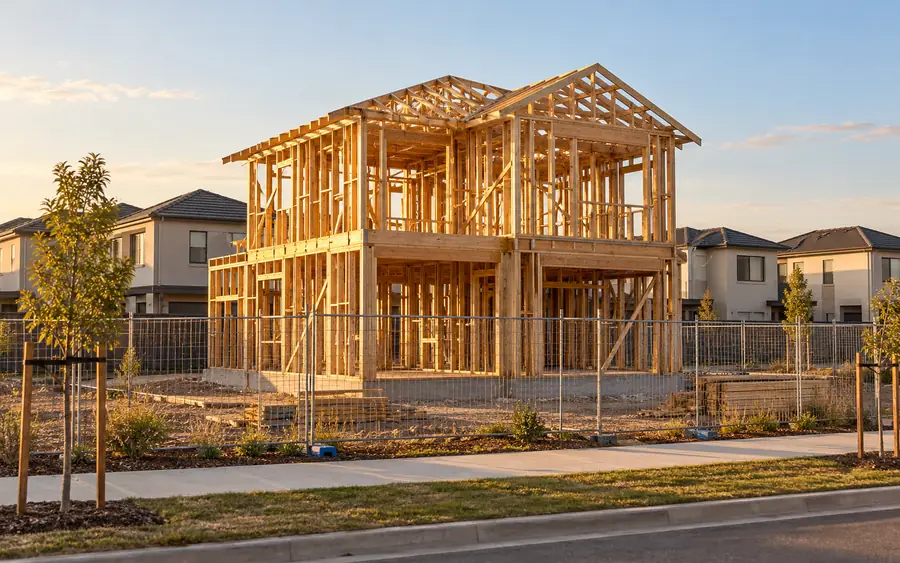
Buying off the plan means signing a contract for a lot that does not legally exist yet. The plan of subdivision has not been registered, so there is no title to search, no house to inspect, and often no slab. What you are buying is a promise, and the time between signing and settling can stretch past a year.
The Sale of Land Act 1962 treats that gap seriously. The Act defines an off-the-plan contract as a contract for a lot on a plan of subdivision, certified or not, that has not yet been registered. The moment a contract fits that definition, a set of buyer protections attaches to it, and most of them cannot be contracted out of.
Everything below is from version 174 of the Act, in force from 9 September 2026.
The deposit: 10 per cent, on trust, untouchable until registration
Section 9AA is the starting point. A vendor must not enter into an off-the-plan contract unless:
- the deposit is paid to a legal practitioner, conveyancer or licensed estate agent acting for the vendor, to be held on trust for the purchaser until the plan is registered, and
- the deposit does not exceed 10 per cent of the purchase price.
The Act adds a note that "does not exceed 10 per cent" means up to and including 10 per cent. Consumer Affairs Victoria states the same cap on its buying off-the-plan page.
Two details make this stronger than it looks. Section 9AA(6) counts any part of the price paid before you are entitled to a transfer as "deposit moneys", so a developer cannot sidestep the cap by calling a second instalment something else. And section 27, which lets a deposit be released early on an ordinary sale, says in subsection (11) that it does not apply to money held under section 9AA. On an off-the-plan contract, the deposit stays in trust until the plan is registered. We cover how early release works on ordinary sales in our guide to section 27 deposit release.
The warning notice
Section 9AA(1A) requires every off-the-plan contract to carry a conspicuous notice telling you three things:
- you can negotiate the deposit with the vendor, within the 10 per cent limit
- a substantial period may pass between signing and becoming the registered owner
- the value of the lot may change in that time.
Read the third one as a warning about your finance. Lenders value the property at settlement, not at signing. If the market moves down, the valuation can come in under the price and the bank lends less than you planned on. The gap is yours to fill.
If the plan never registers: the 18 month rule
Section 9AE(2) is the protection buyers ask about most. If the plan of subdivision is not registered within 18 months after the date of the contract, or within any other period the contract specifies, you may rescind at any time after that period ends and before the plan is registered.
Two things follow:
- Check the period in your contract. The 18 months is a default. A contract can set a longer period, and for a large apartment project it often does.
- The right ends when the plan registers. If the deadline has passed and you want out, act before registration, not after.
When you rescind under section 9AE, section 9AF entitles you to the immediate return of the deposit, less any occupation fees you paid.
When the plan changes after you sign
Developers amend plans. Lot boundaries move, easements are relocated, common property is redrawn. The Act gives you three separate protections.
Notice within 14 days. Under section 9AC(1), if the Registrar requires an amendment to the plan, or the vendor requests one, the vendor must tell you in writing within 14 days.
A 14 day window to rescind. Section 9AC(2) lets you rescind within 14 days after being told of an amendment that will materially affect your lot. Whether a change is material is a question of fact. A relocated drainage easement across the back of a townhouse lot may be. A redrawn boundary three lots away probably is not. Send it to us the day it arrives, because the 14 days do not wait.
Restrictions on use. Section 10 lets you avoid the sale before registration if an amendment restricts or limits the use of your lot, unless the amendment comes from a public authority or government department recommendation. The contract can exclude this right for the final location of an easement shown on a certified plan, so check whether yours does.
Section 9AB also requires the vendor to disclose works that affect the natural surface level of your lot, or of abutting lots in the same subdivision. Cut and fill on a sloping estate in Clyde or Officer is the kind of thing this catches.
Sunset clauses: the developer cannot just walk away
A sunset clause sets a date by which the plan must be registered, or for an apartment the occupancy permit must be issued. If it is missed, the contract can be ended. Before 2019 that was a tool for developers in a rising market: let the sunset date pass, rescind, and resell the same lot for more.
Sections 10A to 10F, which apply to residential off-the-plan contracts, closed that door. A vendor may rescind under a sunset clause only if one of two things happens.
Every purchaser consents in writing. Before rescinding, the vendor must give each purchaser at least 28 days' written notice setting out why the vendor proposes to rescind, why the registration or permit has been delayed, and that the purchaser is not obliged to consent (section 10B(3)).
Or the Supreme Court orders it. Under section 10E the vendor can apply to the Supreme Court, which may allow the rescission only if it is just and equitable. The Court must consider, among other things, whether the vendor acted unreasonably or in bad faith, the reason for the delay, and whether the lot has increased in value. It can order compensation for the purchaser. The vendor pays your costs of that application unless the Court finds you unreasonably refused consent.
Any contract term inconsistent with those sections has no effect (section 10C), and a rescission that ignores them is treated as a breach of contract (section 10D). Since 1 March 2020, section 10F has required the sunset clause itself to spell all of this out.
If a developer's letter asks you to agree to cancel, you can say no. Call us before you sign anything back.
Apartments: two newer protections
The Building Legislation Amendment (Buyer Protections) Act 2025 added two sections that apply only to a lot in a residential apartment building, a term the Sale of Land Act takes from the Building Act 1993. They are in the current version of the Act.
No possession before the occupancy permit. Section 9ADA stops the vendor requiring or permitting you to take possession until an occupancy permit has been issued for your lot, or the part of the building it sits in. The penalty is up to 120 penalty units for an individual and 600 for a company.
No developer bond, a right to rescind. Under section 9AEA, once the occupancy permit has issued, you may rescind if the developer has not arranged a developer bond, or has arranged one for less than the Building Act requires. Read subsection (2) closely. You recover what you paid, plus penalty interest, from a court. It is a right to sue for your money, not an automatic refund, and that recovery is a solicitor's job. A further amendment from 9 September 2026 means the right does not apply where the developer is excepted from the bond requirement.
Townhouses and buildings of three storeys or fewer are covered differently. For contracts signed from 1 July 2026, the Building and Plumbing Commission's Home Warranty scheme covers eligible work worth more than $20,000, and it does not apply to residential buildings over three storeys that contain more than two homes.
What is still to come
The Building Legislation and Treasury Legislation (Tax Relief) Amendment Act 2026 will extend section 9AEA so a purchaser can also rescind if the occupancy permit issues without decennial insurance in place. It commences by proclamation, and no later than 1 December 2027. If your settlement is likely to fall after that, ask us to check what applies when your contract settles.
Possession and access before registration
Section 9AD(1) says you are not entitled to possession before the plan is registered, and section 9AD(2) stops the vendor from requiring you to take it. Section 9AD(3) does give you reasonable access to the lot for any purpose connected with its proposed development or use. That covers a builder measuring up for a fence, or a kitchen designer working out where the cabinets go.
Stamp duty: two concessions, and one of them ends in April 2027
Victoria's off-the-plan concession works by taking construction costs incurred after you sign out of the price before duty is calculated. The SRO's own worked example: a $620,000 apartment with $465,000 of construction costs has a dutiable value of $155,000.
| Ongoing concession | Temporary concession | |
|---|---|---|
| Contracts signed | From 1 July 2023 | From 21 October 2024 and before 21 April 2027 |
| Who can claim | Natural persons over 18 eligible for the principal place of residence concession or the first home buyer exemption or concession | All purchasers, including investors, companies and trusts |
| Property | Any off-the-plan property, including land and building packages | A lot in a strata subdivision with common property: apartments, units and townhouses |
| Value limit, after construction costs | $750,000 for first home buyers, $550,000 for other owner-occupiers | None |
| Must you live there? | Yes, within 12 months of settlement, for 12 straight months | No |
Two points from the SRO's pages that catch buyers. The temporary concession does not apply to house-and-land packages that are not part of a strata subdivision. And the earlier you sign in the build, the more construction there is left to deduct. Sign when the building is nearly finished and the concession is worth very little.
The vendor calculates the construction component and tells your conveyancer about six months before settlement. Until then, any duty figure is an estimate. Our guide to first home buyer duty in Victoria shows how the concession sits alongside the exemption and the $10,000 grant.
What we check before you sign
Off-the-plan contracts are long, and the special conditions do the real work. On a property purchase of this kind we look at:
- The deposit clause. Is it 10 per cent or less, payable to a practitioner or agent on trust? Is a deposit bond accepted?
- The registration period and the sunset date. Are they longer than 18 months? Can the vendor extend them, and on what conditions?
- The plan. Does the lot you are paying for match the lot on the plan: dimensions, easements, car space, storage cage?
- Variation clauses. What can the developer change in finishes, layout or floor area, and is there a tolerance before you can object?
- Settlement timing. How many days after registration notice must you settle? Will your finance approval still be valid?
- Owners corporation documents. The proposed rules, budget and lot liability. More in our guide to owners corporation certificates.
- Nomination and sale before completion. Can you nominate a substitute buyer, and what duty consequences follow?
If the contract needs negotiating, or something goes wrong later, a dispute with a developer is a solicitor's work. We will tell you when a question has crossed that line.
Questions we get asked
Can I get out of an off-the-plan contract if I change my mind?
The usual three business day cooling-off period applies to a private sale off the plan, the same as any other residential purchase. After that, you need a statutory right such as a material plan change or a missed registration deadline, or a right the contract gives you. Our post on the Victorian cooling-off period covers how that window works.
The developer wants to release my deposit early. Can they?
Not under section 27, which does not apply to deposits held under section 9AA. The deposit is held on trust until the plan is registered.
Is a house and land package an off-the-plan contract?
The land contract usually is, if the lot is not yet titled. The building contract is a separate agreement under different legislation. We explain how the two fit together in our guide to house and land packages.
Talk to us before you sign
The rights above are strong, but most of them only help if you notice the trigger in time: a 14 day window after a plan change, an 18 month date, a letter asking for consent. Reading the contract before you sign tells you which dates to watch.
Wise Step Conveyancing is at 105A High Street, Cranbourne. We act on off-the-plan purchases across the south-east growth corridor, from Clyde North and Botanic Ridge to Officer and Pakenham, and anywhere in Victoria through PEXA. We are open Monday to Friday, and on weekends by appointment.
Send us the contract and ask us for a quote, or get in touch if you would rather talk it through first.
This article is general information about Victorian conveyancing and is not legal advice for your particular transaction. Speak to us about your specific circumstances.
Read next
Victoria
House and land packages in Victoria: two contracts, two sets of rules
A house and land package is sold as one product, but legally it is usually two contracts under two different Acts, with different deposits, different cooling-off rights and different risks. Knowing which rule belongs to which contract is most of the battle.
Victoria
First home buyer stamp duty in Victoria: the thresholds, the grant, and the conditions people miss
If the dutiable value is $600,000 or less, a Victorian first home buyer pays no stamp duty. Here is where that line sits, what the $10,000 grant covers, and the conditions attached to both.